
 Afghanistan International: Several sources told Afghanistan International that the Taliban has recently begun reshuffling civilian and military officials across Badakhshan province. The changes have so far affected police commanders, district governors and intelligence chiefs. As part of the reshuffle, the Taliban has appointed new officials in Faizabad, Yaftal district and the Darwaz districts of Badakhshan. Sources said those appointed to civilian and military positions in the Darwaz districts were close associates of Ghulamullah Ahmadi, deputy commander of the Taliban’s military division in Badakhshan. Experts view the frequent and rapid reshuffling of Taliban officials in Badakhshan as a sign of the group’s concerns over maintaining control of the province. They believe anti-Taliban resistance groups are gaining strength and that the Taliban is preparing for the possibility of widespread clashes next spring. Click here to read more (external link).
Why Are Afghan Immigrants Still Waiting for US Visas Despite Court Ruling?

Khaama: Afghan immigrants are among thousands of applicants still waiting for US visas despite a federal court ruling against the Trump administration’s suspension of immigrant visa processing for citizens of 75 countries. Why do the delays persist despite the ruling? Afghan families are among thousands of immigrants from 75 countries still facing uncertainty over US immigrant visas, despite a federal judge striking down the Trump administration’s blanket visa-processing suspension, according to US media reports. Click here to read more (external link).
Traffic Accidents Surge in Kandahar as Taliban Disorder and Underage Driving Fuel Chaos

8am: Some residents of Kandahar say traffic disorder in the city has increased compared with the past. According to them, accidents have also become more frequent as the number of cars and motorcycles has grown. They add that drivers’ carelessness and the failure to enforce traffic laws have made their daily lives difficult. In their view, the lack of traffic order has now become one of the everyday problems, and people face the risk of traffic accidents every day. Meanwhile, sources at Mirwais Regional Hospital in Kandahar say that between August 23 and September 22, 2026, about 61 people injured in traffic accidents were brought to the hospital, and 11 of them died because of the severity of their injuries. Residents of Kandahar have expressed concern about the reckless driving of Taliban fighters, saying that members of the group drive military vehicles at high speed on the city’s busy roads and do not consider the safety of people’s lives. In their view, such behavior has not only increased the risk of traffic accidents but has also deepened concerns about security in the city. Click here to read more (external link).
Tolo News in Dari – October 26, 2026
Sources: Taliban Interfering in Vaccination Efforts in Helmand Province
 8am: Officials from the World Health Organization (WHO) and the United Nations Children’s Fund (UNICEF) responsible for vaccination in Helmand have reported interference by the Taliban in the vaccination process in the province. The officials said on Monday, October 26, that the Taliban’s interference had obstructed their activities and delayed the implementation of vaccination programmes. Corruption and complaints about the Taliban’s treatment of organisations are not limited to Helmand. In several other provinces of Afghanistan, people have also complained about corruption in institutions and organisations under the group’s control. Click here to read more (external link).
Football: Abu Muslim Farah 1-0 Ariana Khost in ACL
 Ariana: Abu Muslim Farah defeated Ariana Khost 1-0 in Match 59 of the sixth season of the Afghanistan Champions League in Kabul on Monday. The victory leaves Abu Muslim Farah in second place in the standings with 28 points. Click here to read more (external link).
More
Taliban Draw Closer to Russia as Rift With Pakistan Widens
 8am: Asif Durrani, Pakistan’s former special representative for Afghanistan, has recently expressed concern over the alliance between the Taliban and Russia in an article published on the Arab News website, calling the shift detrimental to Islamabad. According to Durrani, the growing closeness of Russia, and likewise India, to the Taliban strengthens the group’s position and limits Pakistan’s room for maneuver. In his view, this convergence reduces the Taliban’s responsiveness to Pakistan’s security concerns. Never mind that the Taliban have essentially never been accountable to Pakistan on this matter, let alone that we could speak of that accountability decreasing or increasing. Click here to read more (external link).
Related
Tolo News in Dari – October 25, 2026
Afghanistan rise above England to match their highest-ever ODI ranking
 Ariana: Afghanistan have climbed to seventh place in the latest International Cricket Council (ICC) men’s ODI team rankings, overtaking England and matching their highest-ever position in the format. According to the rankings released on Saturday, October 24, Afghanistan have 94 rating points, moving one place up to seventh. England, the 2019 Cricket World Cup champions, have dropped to eighth with 93 points, while Sri Lanka occupy sixth place with 95 points. Click here to read more (external link).
Other Afghan Sports News (Football)
After Taliban Opium Ban, New Global Hub Emerges In Afghan Borderlands With Iran, Pakistan
 By Frud Bezhan and Daud Khattak
Radio Free Europe/Radio Liberty
October 24, 2026
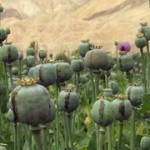
Afghanistan’s opium output, long the world’s largest, has plunged since the Taliban imposed a sweeping ban on illicit narcotics in 2022.
But the militant Islamist group has failed to eradicate cultivation completely, while production appears to have increasingly shifted to neighboring Pakistan and Iran.
Pakistan’s southwestern province of Balochistan and Iran’s southeastern province of Sistan-Baluchistan, both bordering Afghanistan, have seen a sharp rise in poppy cultivation in recent years, according to satellite imagery and interviews with local farmers.
“The Taliban drugs ban, combined with growing instability in the tri-border area, has created the conditions for widespread poppy cultivation in Pakistan’s Balochistan Province and parts of Iran,” said David Mansfield, a leading UK-based expert on Afghanistan’s illicit drugs industry.
As a result, the remote and volatile borderlands of Afghanistan, Pakistan, and Iran have become “a global center for opium production,” added Mansfield, author of A State Built On Sand: How Opium Undermined Afghanistan.
Experts warn of higher levels of poppy cultivation in the region in 2027, which they say could increase the supply of heroin on the international market, generate revenue for armed groups, and fuel violence.
Pakistan At The ‘Core’
Balochistan Province appears to have become the main hub of opium cultivation in the Afghanistan-Pakistan-Iran border region.
Pakistan’s largest and poorest province, Balochistan has endured a decades-long insurgency by separatist groups and other militants drawn largely from the ethnic Baluch minority. Violence has escalated in recent years as armed groups intensify their campaign against the state.
Islamabad has denied reports of opium cultivation in the country and maintained that any poppy crops discovered have been eradicated. Pakistan’s Interior Ministry and the Balochistan provincial government did not respond to RFE/RL’s requests for comment.
The United Nations Office on Drugs and Crime (UNODC) has estimated that opium production in Pakistan remains marginal.
“UNODC has said in the past that there were indications of displacement of poppy to countries around Afghanistan,” the agency said in a statement sent to RFE/RL.
“What we currently observe is that data from countries around Afghanistan is still scarce, as only two countries report on eradication. And while eradication figures do not directly reflect cultivation patterns, the sharp increases in recent years point towards a certain degree of spillover effects.”
But satellite imagery from Alcis, a British firm specializing in satellite analysis, along with interviews with local farmers suggests that opium cultivation is widespread across the province and is expanding.
“Satellite imagery assessments identified more than 9,000 hectares of poppy cultivation in Balochistan alone,” said Mansfield, who authored an August report for Alcis.
Most of the opium cultivation appears to be concentrated in the districts of Loralai and Killa Abdullah in Balochistan.
Abdul Qahar Wadan, a former member of Pakistan’s National Assembly representing Balochistan’s Killa Abdullah district, told RFE/RL that poppy cultivation is rampant in the province, allegedly with the backing of senior military officials and local pro-government power brokers who collect commissions from growers.
Monawar Hussain, the chief administrative officer in Killa Abdullah, rejected the allegation, telling RFE/RL that poppy cultivation had declined following an eradication campaign last year. However, Alcis’s 2026 satellite imagery shows no clear evidence of eradication.
A farmer in Killa Abdullah who spoke to RFE/RL on condition of anonymity said poppy growers pay bribes to local authorities through influential intermediaries, who collect commissions and pass on a share to officials.
The farmer alleged that when media reports trigger pressure from higher authorities, growers and their backers sometimes agree to cultivate poppies on barren land so officials can destroy the crop and publicize the eradication effort.
For years, Lala Jan Kakar resisted the lure of poppy cultivation, but mounting insecurity, drought, and flash floods have devastated traditional fruit farming.
“It’s not possible to resist it anymore. The demand for poppies is much more than fruits, and so is the income,” Kakar, who lives in Killa Abdullah, told RFE/RL.
The surge in production in Pakistan, experts say, has been driven by a growing number of Afghan opium farmers crossing the border to lease land and cultivate poppy.
Since the Taliban banned poppy cultivation in Afghanistan, growers from neighboring Kandahar and Helmand provinces have brought their expertise across the border, striking deals with local farmers.
“The Afghan poppy growers have both money and expertise,” Kakar said, explaining that they invest millions of Pakistani rupees in solar-powered wells and share profits with landowners.
With groundwater scarce and conventional crops less profitable, poppies offer a quicker return and can be harvested twice a year, he said.
“Many farmers have doubled the land they cultivated in 2026 — a stark indication of the scale and pace of this expansion and that we should expect much higher levels of poppy cultivation in 2027,” said Mansfield.
Cultivation Spreading In Iran
A similar pattern has emerged in Iran, where Afghan farmers have crossed the border to cultivate poppies as tenants and sharecroppers, drawing on family ties and local contacts.
Opium cultivation has been reported across a growing number of Iranian provinces in recent years, including Razavi Khorasan in the east, Kermanshah and Lorestan in the west, and Fars in the south.
Sistan-Baluchistan, one of Iran’s largest and poorest provinces, remains the country’s main opium-producing region. Satellite imagery from 2026 appears to show extensive poppy cultivation across parts of the province, with large fields often devoted exclusively to the crop.
Some farms also appear to use drip irrigation for poppy cultivation. Given the substantial upfront cost of installing these systems, their use suggests that farmers who planted in late 2025 expected a low risk of eradication.
“Unlike in Afghanistan, where they cultivated a variety of crops, these farmers are increasingly devoting large plots in Pakistan and Iran entirely to poppy,” said Mansfield. “The shift is not just across borders; it is from mixed farming to large-scale poppy monoculture.”
Iranian authorities, preoccupied with the war against the United States and Israel since late February, have been unable or unwilling to destroy the 2026 poppy crop, reinforcing growers’ confidence.
Sistan-Baluchistan has also been the site of an intensifying insurgency by separatists and militants who have exploited the longstanding grievances of the Baluch minority, which has faced disproportionate discrimination and violence at the hands of the authorities.
As the Iran war continues, the economy teeters on the brink of collapse, and the state’s attention remains focused elsewhere, poppy cultivation in Iran is expected to increase further in 2027, according to experts.
Experts say rising drug production in the border region of Iran, Pakistan, and Afghanistan both reflects and fuels violence.
“Armed groups compete for tax revenues from the drugs trade and other cross-border activities, including people smuggling and trade in fuel, minerals and other goods,” said Mansfield.
Resurgence In Afghanistan
Opium cultivation also appears to be rebounding in Afghanistan despite the Taliban’s ban, underscoring the country’s continued importance in the global opium trade.
Production is concentrated in the northeastern province of Badakhshan, which is estimated to account for around a half of the country’s opium output, and several southwestern provinces.
Driven by drought, mounting debt, and economic hardship, farmers in Badakhshan and Helmand have protested and defied the ban even in the face of the Taliban’s forceful enforcement.
“In 2026, poppy cultivation remained widespread across Badakhshan’s rainfed and irrigated land,” said Mansfield. “In the southwest, cultivation almost doubled between 2025 and 2026, though it remained limited, concentrated in remote areas, and concealed within wheat fields and behind household compound walls.”
Hostile reactions to crop eradication suggest the Taliban is wary of provoking further unrest as Afghanistan’s economic crisis deepens.
A Taliban directive barring the authorities from searching homes for poppy or opium without a court order appears to be a significant concession.
“But there is a clear risk: Growing numbers of farmers in the southwest may read the concession as a signal that the authorities will tolerate cultivation beyond walled compounds,” said Mansfield. “If so, Afghanistan could see a dramatic rise in opium production in 2027.”